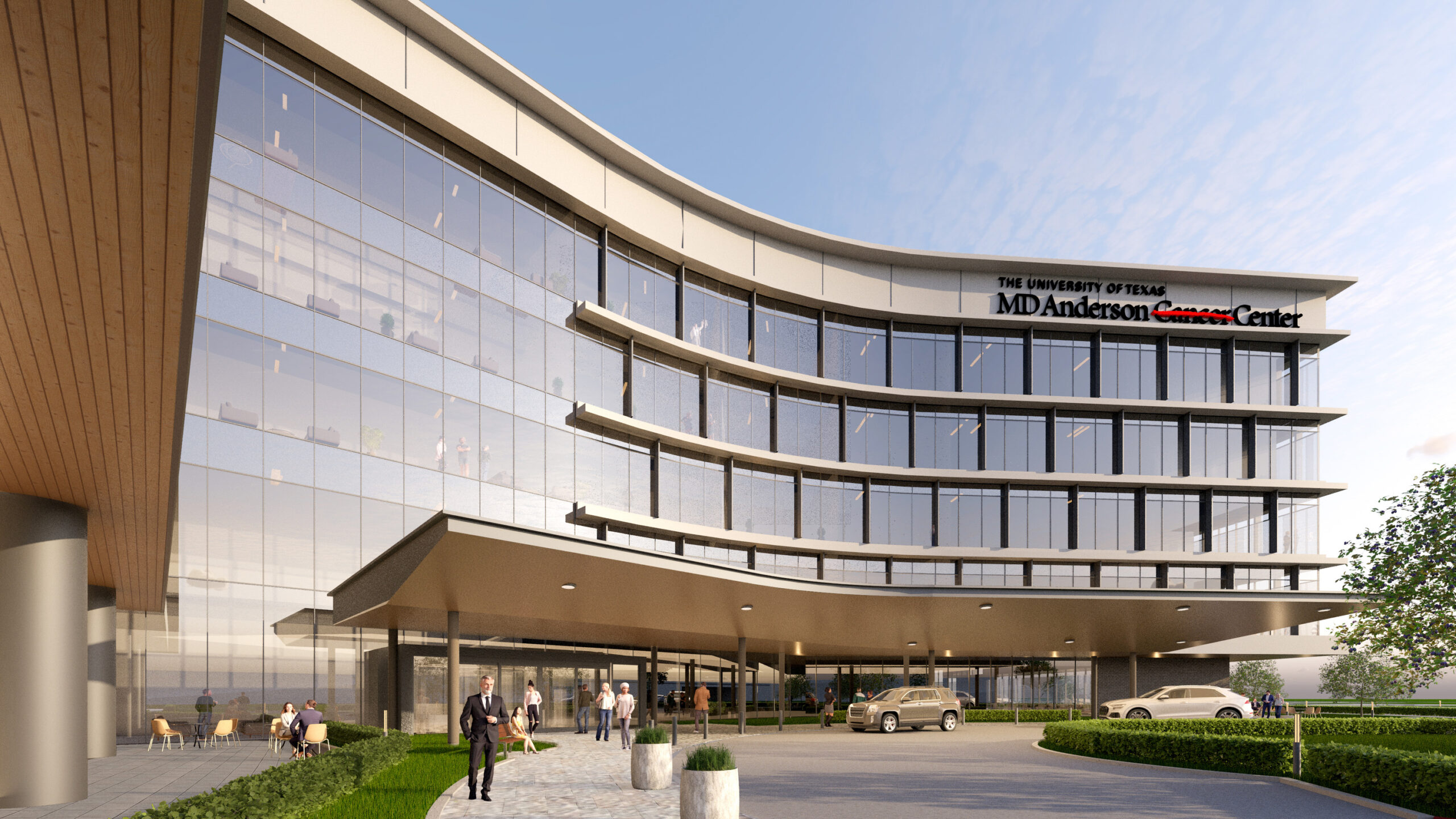
For the team building the University of Texas MD Anderson Cancer Center in Sugar Land, Texas, the project represented more than another healthcare facility. It was an opportunity to deliver cancer care closer to patients while making a lasting impact on one of the nation’s most rapidly expanding communities.
“Fort Bend is one of the fastest growing counties in the country, and the impact is huge,” Project Director Mark Akers said. “There are a lot of people here to begin with, and there are more coming.”
Spanning 470,000 square feet, the facility reflects MD Anderson’s commitment to bringing comprehensive cancer care closer to the communities it serves. The hospital is designed to support nearly every stage of a patient’s journey under one roof, featuring 28 imaging machines, 19 surgery and procedure rooms, 46 pre-op and post-anesthesia care bays, an on-site pharmacy and lab, and 162 additional treatment and support rooms and bays. For patients and families, being able to access a wide range of care in one location can make an already challenging time a little easier to navigate.
That’s a perspective Senior Superintendent Jason Corley connects with personally, making this project’s impact especially meaningful.
“My wife is going through cancer right now, so working on projects like this makes an impact — not only for the people who build them, but for the communities they serve,” Corley said. “To be able to go to one facility and not have to leave the building to get all the care that they need means a lot to those people, and to this community as well.”
Early on, the team knew the opportunity here was significant, but so was the challenge. Delivering one of the most complex healthcare facilities in the region requires expertise, resources, and collaboration from both local teams and National Healthcare Group members.
“We’ve supplemented the project team with people from the National Healthcare Group and people from other offices with healthcare experience to help make the project successful,” Akers said. “They’ve also mentored and helped teach some of the younger project engineers and project managers the ins and outs of a healthcare project.”
It was this collaborative balance between local expertise and national perspective that made the partnership so effective.
“Using the specialty knowledge that a healthcare person has, with the local knowledge that someone out of Houston that’s been here for a long time has, and marrying those two together was a pretty good match,” said Akers.
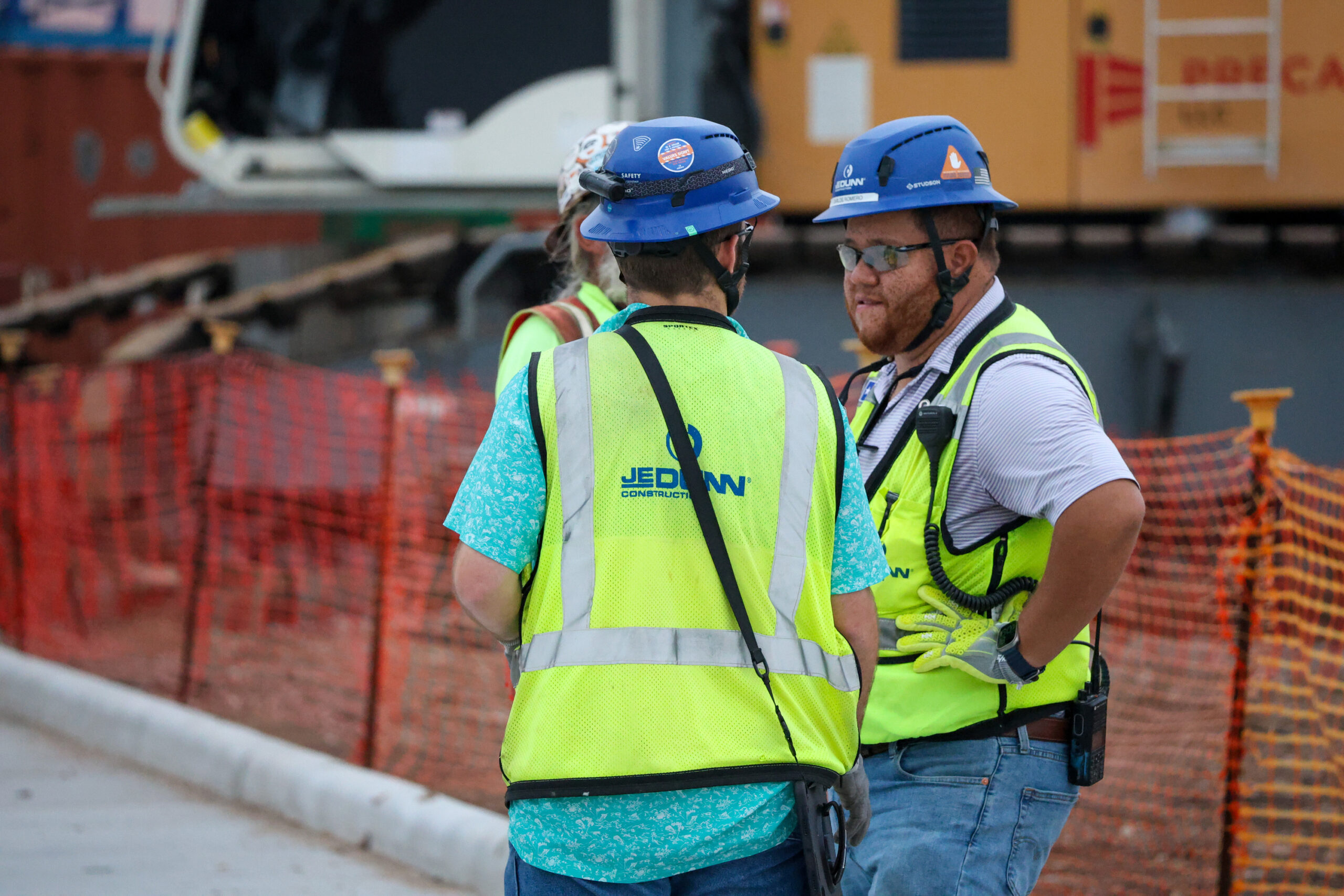
Technical expertise helped the team succeed, but the team members point to something else that made all the difference: genuine relationships, built both on and off the jobsite. Weekly outings allowed the team to connect as friends, not just colleagues.
“We’re talking about what’s happening away from work,” said Corley. “Work might come up, but I know what’s happening in their lives, they know what’s happening in mine, and that makes not nearly as many silos on site.”
As the hospital progresses, so has the experience, confidence, and overall relationships of the team. The project has become a classroom as much as a jobsite, creating growth that will extend well beyond project completion. More than anything, this growth has reinforced the value of approaching the work as one team.
“If we come out as a family, as a united front, the trade partners pick up on that and they respond accordingly,” Corley said.