
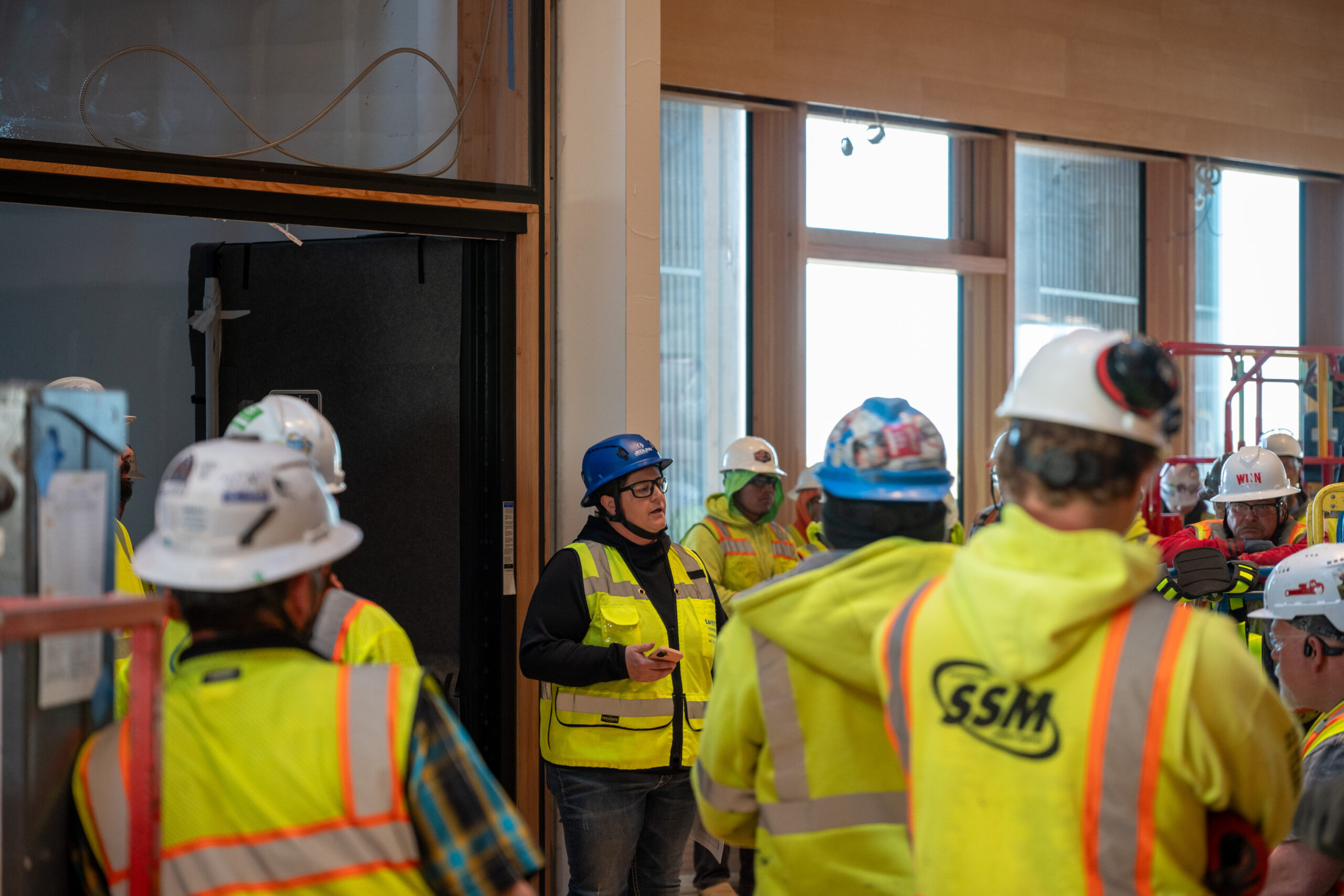
The more knowledge our teams have, the better equipped they are to identify hazards, plan work safely, and execute with confidence — making safety training one of the most valuable leading indicators of jobsite success. Recently, our HR and Safety departments came together to create a new report that makes tracking safety training easier and more accessible.
1. When the idea for the new Safety Training Report first came up, what problem were you hoping to solve?
Jerry Sanchez: JE Dunn project leadership could not easily determine which safety training courses and certifications their team members had completed.
Sarah Mahasneh: The goal was to give all employees a single, reliable view of safety training progress. Before we had this report, training data was manually collected and delivered to specific leadership groups, due to lack of available information and automation. We wanted to make it easier for everyone to track safety training progress at both an individual and a team level.
2. What makes having easy access to safety training and certification information so valuable for our teams?
SM: When safety training and certification information is easy to access, employees know what’s expected of them, managers can quickly identify and address training gaps, and safety leaders have the visibility needed to make informed decisions.
JS: If a JE Dunn self-perform carpenter journeyman arrives at a jobsite and is required to use a personal fall arrest system (PFAS), that carpenter must be trained as a PFAS-authorized user before using this life-saving equipment. The new report allows foremen and superintendents to determine whether the carpenter journeyman has completed the required authorized-user training beforehand.
3. How do you expect this report to help project teams and office teams stay safer and more compliant?
JS: The new Safety Training Report helps our project and office teams make better safety decisions by providing real-time visibility into employee training and certifications. It enables leaders to verify qualifications for high-risk tasks, identify training gaps, monitor expiring certifications, and ensure our workforce remains compliant with company and regulatory requirements. Ultimately, the report supports safer worksites, stronger accountability, and improved operational readiness.
4. What did this project teach you that you’ll carry into future initiatives?
JS: This project reinforced the value of collaboration, accurate data, and continuous improvement. Developing the report required close coordination between Safety, Operations, Learning & Development, and HRIS teams to understand what information leaders need to make safer decisions in the field and office. It demonstrated that when teams work together toward a common goal, they can create solutions that are both practical and impactful.
SM: Like Jerry, this project reinforced that the best solutions happen when different teams combine their expertise around a shared goal. I was also reminded that successful reporting is a continuous improvement journey, where feedback and evolving business needs help shape future enhancements.